Hosted GLM-OCR API
at $1 per 1,000 pages.
OpenParser hosts Z.ai GLM-OCR on POST /parse. Send PDFs and images; receive typed layout elements or markdown, then run /extract with source citations.
Get a GLM-OCR API key
Create a key in Studio, then send your first parse request with ocr_model set to glm-ocr.
- Sign in to API keys in OpenParser Studio and create a key.
- Send the key in the
Authorization: Bearer YOUR_API_KEYheader. - Set
ocr_modeltoglm-ocrand upload a PDF, PNG, or JPEG toPOST /parse.
curl https://api.openparser.dev/parse \
  -H "Authorization: Bearer YOUR_API_KEY" \
  -H "Idempotency-Key: $(uuidgen)" \
  -F 'request={"ocr_model":"glm-ocr","output_format":"openparser@1"};type=application/json' \
  -F "file=@invoice.pdf"
You do not need a Z.ai account, a GPU, or a vLLM server. New accounts get $10 in free credits.
Hosted GLM-OCR behind REST
Parse with glm-ocr, extract against your schema, poll /jobs, and retrieve files under the same API contract as every other OpenParser model.
curl https://api.openparser.dev/parse \
  -H "Authorization: Bearer $OPENPARSER_API_KEY" \
  -H "Idempotency-Key: $(uuidgen)" \
  -F 'request={"ocr_model": "paddleocr-vl-1.6"};type=application/json' \
-F "file=@invoice.pdf"{
"document_id": "doc_3f9a2c",
"elements": [
{
"id": "elem-total",
"kind": "text",
"text": "Total due: €1.440,00",
"locations": [{
"page_number": 1,
"bbox": { "left": 468, "top": 712, "right": 1118, "bottom": 760 }
}],
"confidence": { "score": 0.98 }
}
],
"markdown": "# INVOICE\n…"
}Try GLM-OCR in Studio
Upload a PDF in the playground, pick glm-ocr, create API keys, and review page usage.
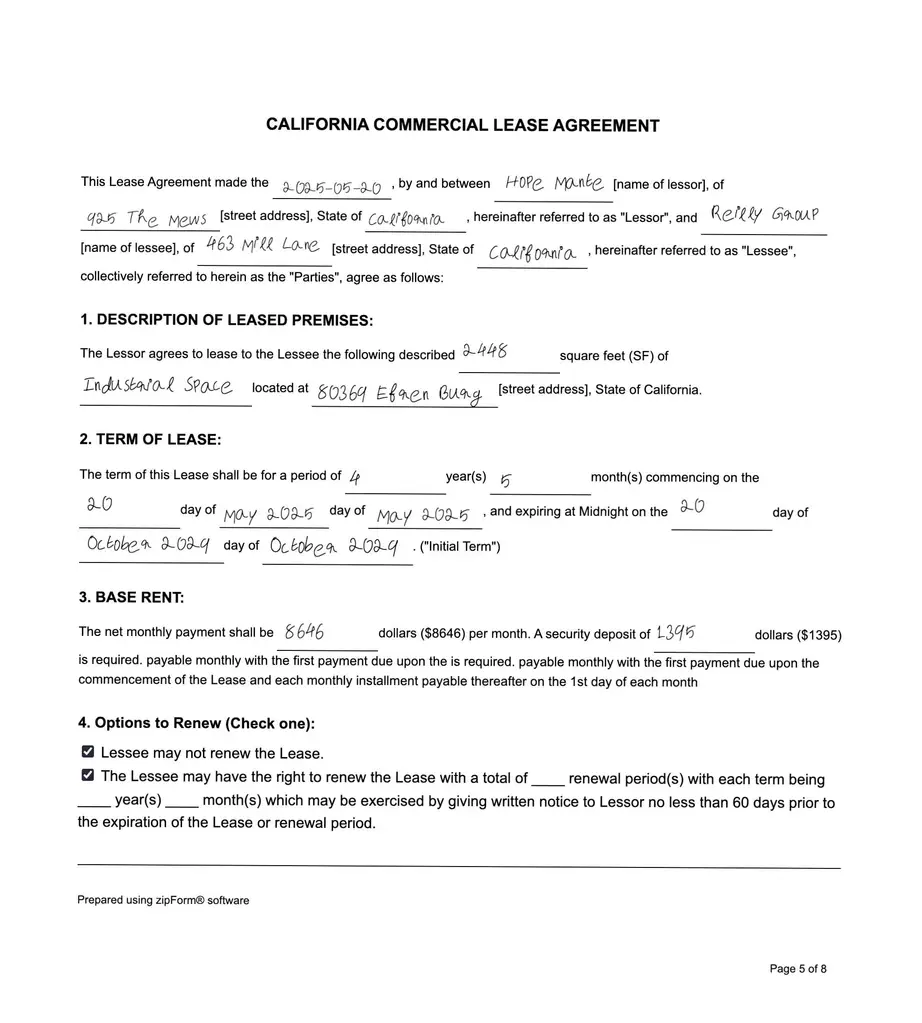
Upload a document, pick an OCR model, and switch on extraction.
What you get on top of the model
GLM-OCR reads text, tables, and formulas. OpenParser runs the GPUs and adds its document output, job modes, and /extract with source citations.
Tables and formulas
GLM-OCR recognizes text, tables, and LaTeX formulas region by region. Tables come back as structured elements, formulas as math elements.
Same layout model as PaddleOCR-VL
Both pipelines detect regions with PP-DocLayoutV3, so switching ocr_model between glm-ocr and paddleocr-vl-1.6 keeps the same element types.
Pinned model revision
OpenParser serves a fixed GLM-OCR revision with checksum-verified weights. Upgrades roll out on the hosted side.
Schema extraction with citations
Point /extract at a parse job and a JSON schema. Grounding citations link each field to element_id values in the parsed document.
Runs on OpenParser GPUs
Documents are processed on GPUs that OpenParser operates. They are not forwarded to the Z.ai cloud API.
Sync, async, and batch
Parse one file synchronously, queue a large PDF for async processing, or submit a batch of documents in one request.
GLM-OCR API pricing
Hosted GLM-OCR costs $1 per 1,000 parsed pages, the same as PaddleOCR-VL. Your $10 signup credits cover about 10,000 pages if used only for parsing. Schema extraction adds language-model token costs.
At signup. About 10,000 pages on open-weight models.
On open-weight models. Cloud OCR bills at its own page rate.
Billed on the tokens of the llm_model you pick.
- No minimums
- No per-seat fees
- Sync, async, and batch
- Source citations
- Console and API keys
GLM-OCR API FAQ
Hosting, output shape, pricing, and how GLM-OCR compares with PaddleOCR-VL on OpenParser.
What is GLM-OCR?
GLM-OCR is an open-weights document OCR model from Z.ai, released under the MIT license. It pairs a CogViT vision encoder with a small GLM language decoder (about 0.9B parameters) and reports 94.62 on OmniDocBench v1.5 on its model card.
Is there an official GLM-OCR API?
Z.ai offers GLM-OCR through its own cloud platform. OpenParser is an independent hosted option: you call glm-ocr with the same request, output format, and API key you use for PaddleOCR-VL, Mistral, Azure, Google, and AWS Textract.
How much does the GLM-OCR API cost?
Parsing costs $1 per 1,000 pages, the same as hosted PaddleOCR-VL. New accounts get $10 in credits at signup (about 10,000 pages). Extraction adds the token cost of whichever language model you select.
Do I need my own GPU or vLLM server?
No. OpenParser runs GLM-OCR with vLLM and the PP-DocLayoutV3 layout model on its own NVIDIA GPUs. You send files over HTTPS with your API key.
What does /parse return for GLM-OCR?
A ParsedDocument with pages, typed layout elements (text, headings, tables, formulas, figures), bounding boxes in page pixels, and markdown. It is the same openparser@1 format every OpenParser model returns.
Should I use GLM-OCR or PaddleOCR-VL?
Both cost the same and share a layout model, so try both on your documents in the playground. PaddleOCR-VL exposes per-request options such as chart recognition; GLM-OCR has no options and is a strong default for tables and formulas. See the GLM-OCR vs PaddleOCR-VL comparison.
Upload a PDF and call /parse with GLM-OCR
Inspect typed elements, markdown, and schema-filled JSON with source citations in the playground. OpenParser hosts inference; you send files over HTTPS.